
Fundamentos de Salsa On2: Footwork y Sistema de Conteos
Los fundamentos no son el trámite antes de lo interesante: son lo que hace que todo lo demás funcione. Cómo se cuenta el on2, qué pasa con los pies en cada tiempo y por qué esta base te da libertad en vez de quitártela.
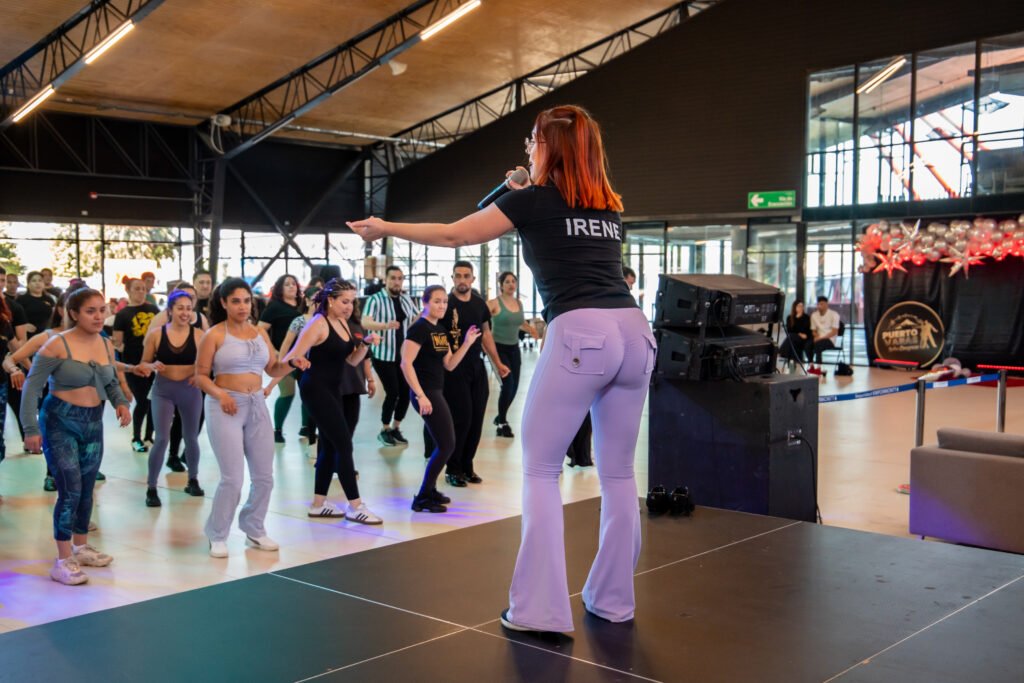
Hay una pregunta que me hacen tanto como la de on1 vs on2, y es esta: “Irene, ¿por dónde empiezo?”. Y mi respuesta siempre es la misma: por los fundamentos. No porque sea lo más vistoso, sino porque es literalmente el abecedario sobre el que se construye todo lo demás dentro de la salsa on2.
If you skip the fundamentals and go straight to pretty moves, you're building a house without foundations. It might hold up for a season or two. But at some point it will show, and it usually shows exactly when you most want to shine: on a packed dance floor, to music you don't know, with a partner you've never danced with.
What exactly “fundamentos” means in On2
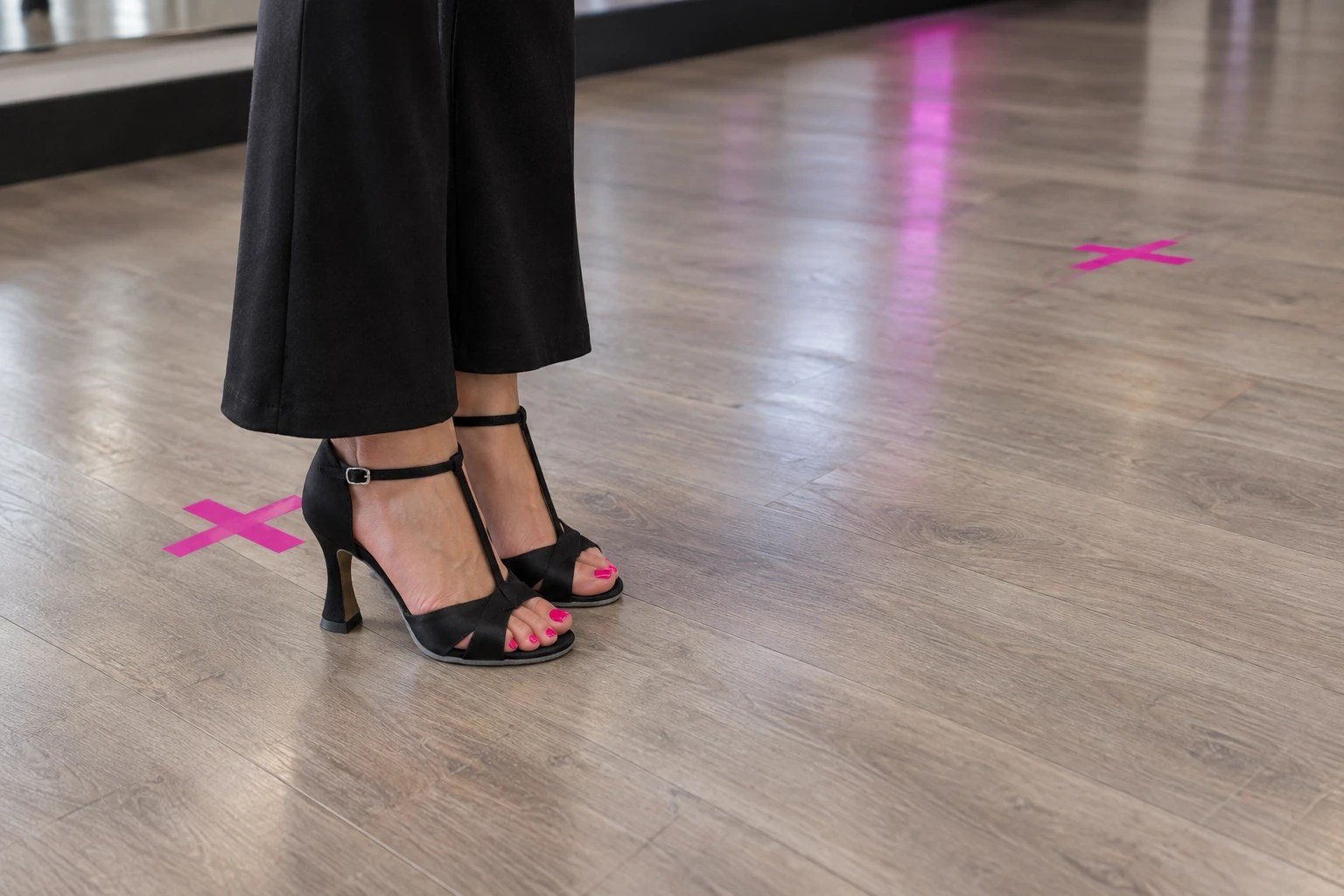
Quiero ser muy precisa aquí, porque es una palabra que se malinterpreta mucho. Cuando hablo de “fundamentos” no me refiero a un estilo aparte, ni a una rama exótica de la salsa, ni siquiera al trabajo de sabor y movimiento corporal del que seguramente ya me has oído hablar en mis vídeos. Me refiero, muy concretamente, a dos cosas: tu footwork —what your feet are doing—and your counting system —knowing exactly where you are in the bar at every moment.
Es la gramática de la salsa on2. Antes de poder “hablar con soltura” con tu cuerpo, necesitas saber leer y contar la música sin pensarlo, y necesitas que tus pies respondan a ese conteo de forma automática. Todo el trabajo de sabor, de movimiento de torso y cadera —eso lo trabajamos en otro curso aparte, el de Movimiento Corporal— se apoya completamente en que esto de aquí ya esté sólido. Si el footwork y el conteo fallan, ese trabajo corporal se va a notar forzado, por muy bien que lo hagas de cintura para arriba.
That counting system isn't random: it follows the clave, the rhythmic pattern that has carried son, mambo and salsa since their Afro-Cuban roots. Understanding where your break lives inside that pattern is what makes everything click into place later on.
This is the first building block of what I call my Body Awareness & On2 Root Technique Method: it's not a collection of random moves, it's a system where every piece rests on the one before. And the fundamentals are the first stone. If you'd like to know where this whole approach comes from, I go into more detail in my bio.
The first steps, no shortcuts
Let me show you how I structure this part with my students, because I believe the order matters far more than people think.
- Weight work. Before thinking about any step, we work on shifting your weight from one leg to the other. Sounds boring, I know. But if you don't master this, every step you learn afterwards will be built on shaky ground.
- The counting system, without music. 1-2-3, pause, 5-6-7, pause. No steps yet: just understanding where you land within those eight beats and, above all, where your break falls on 2.
- The basic, on the spot. We bring in the step pattern, but without traveling. The basic you already know from another style helps, yes, but it doesn't replace this On2-specific footwork.
- The basic, traveling. Only once your footwork and counting are solid do we add movement through space. This is where you start to feel you're walking the music, not chasing it.
- 1
- 2break
- 3
- 4pause
- 5
- 6
- 7
- 8pause
Por qué esto no es “aburrido”, es freedom
Con esto, ojo, no hemos tocado todavía ni el movimiento corporal ni los giros. Eso viene después, en otros cursos, apoyado sobre esta base. Si intentas trabajar el giro o el sabor antes de tener esto sólido, lo que vas a conseguir es que se note forzado, inestable, “impostado” — precisamente lo contrario de lo que buscas.
Once you master footwork and counting, you stop depending on memorized step sequences. You start being able to truly improvise, to respond to the music in the moment. That's freedom, and it's also what takes away that social-dancing anxiety: when your body already knows how to read the music, you stop being afraid of going blank.
In fact, I often share short clips of this footwork on my Instagram, precisely because I want to bust the myth that elegance in On2 is something you're born with. And on my YouTube channel I also post videos that explain these differences in more depth.
How you can work on this with me
If you want to try it without committing to anything, there's Basic, my weekly live-access format, no lock-in.
If you already know the fundamentals—footwork and counting—are exactly what you need to work on in depth, I have a structured course, Mambo Fundamentals, part of my Standard online courses, with access for a full year.
And if you're after one-on-one correction with direct feedback, I have a more personal format: my private lessons.
Fundamentals are the starting point, no matter what, whichever course you want to take on next.
Three ways to work on it
Basic · weekly access
No lock-in. A different topic every week, live. See Basic: live classes →
Standard · structured course
One year of access. A complete foundations progression, with a clear roadmap. See Mambo Fundamentals →
Private lessons
One-on-one. Direct feedback, in Madrid or online. See private lessons →